

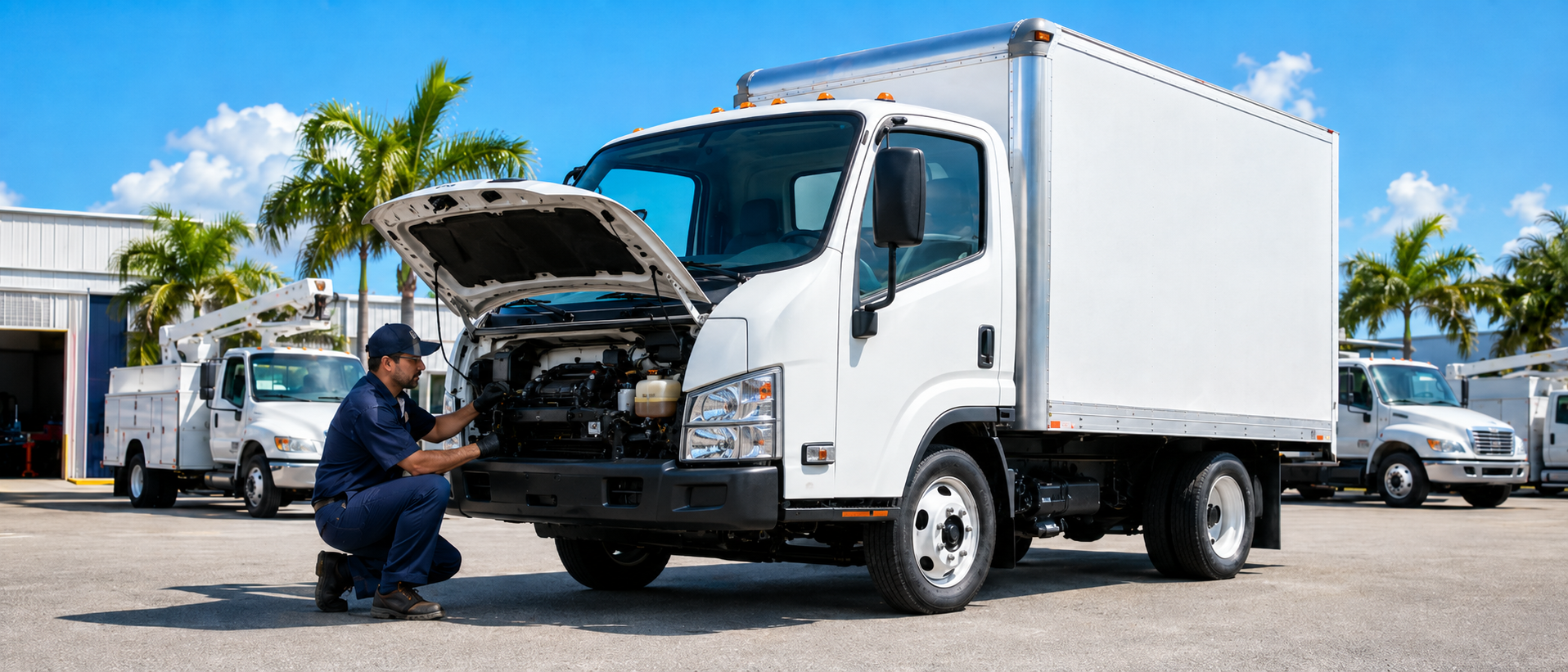
Operating commercial vehicles in Palm Beach County’s climate introduces distinct mechanical challenges. High ambient temperatures exceeding 90°F, paired with high atmospheric humidity, cause engine bay temperatures to frequently surpass 140°F during extended idling or heavy traffic delays.
Under these environmental conditions, standard highway maintenance schedules fail to protect key powertrain assemblies:
- Thermal Oil Oxidation & Viscosity Breakdown: High engine bay temperatures accelerate the oxidation of heavy-duty diesel engine oil. Heat breaks down the oil’s shear stability, causing viscosity loss that thins protective lubrication films. This results in metal-to-metal contact across crankshaft bearings, camshaft lobes, and turbocharger shafts.
- Depletion of Additive Packages: Continuous thermal stress depletes the Total Base Number (TBN) in engine oil, neutralizing corrosive acids created during combustion. Once TBN drops below critical thresholds, sludge accumulates inside crankcase galleys and oil pickup screens.
- Transmission & Differential Shear Stress: Torque demands from constant stop-and-go driving overheat automatic transmission fluid and gear oils. Overheated hydraulic fluid loses friction performance, leading to slipping clutch packs, erratic shift timing, and premature differential gear wear.
- Coolant System Acidification: Prolonged high-temperature operation breaks down corrosion inhibitors inside extended-life coolants. Acidic coolant causes internal radiator scaling, water pump cavitation, and liner pitting in wet-sleeve diesel engines.
Under federal safety regulations mandated by FMCSA 49 CFR Part 396.3 standards, commercial motor carriers must maintain systematic inspection and maintenance records for every active vehicle to ensure safe highway operation and prevent roadside compliance violations.
Severe-Duty Service Intervals for Stop-and-Go Regional Routes
Commercial vehicles operating on short-haul delivery loops or urban routes in West Palm Beach and Lake Park encounter far more severe duty cycles than long-haul highway trucks. Frequent idling, low-speed driving, and constant brake applications require adjusted service schedules.
1. Engine Oil & Filter Change Schedules
Urban delivery vans, box trucks, and vocational chassis require shortened oil drain intervals to prevent premature component wear:
- Severe-Duty Interval: Replace engine oil and spin-on filters every 5,000 to 7,500 miles (or 150 to 200 engine hours), compared to the 15,000-mile intervals typical for long-haul highway trucks.
- High-Viscosity Synthetic Lubricants: Utilize API CK-4 heavy-duty synthetic engine oils engineered to resist thermal breakdown and maintain shear stability under high heat.
- Fuel-Water Separator Maintenance: Drain fuel-water separators weekly and replace primary/secondary fuel filters every 10,000 miles to protect high-pressure common rail (HPCR) fuel injectors from water-induced corrosion.
2. Brake System Monitoring & Friction Management
Heavy urban traffic forces drivers to apply brakes repeatedly under heavy loads, driving up friction temperatures:
- Brake Lining Glazing & Thermal Fading: High friction heat crystallizes the surface of drum brake shoes and air disc pads, causing severe thermal glazing. Glazed linings lose stopping power and increase required pedal effort.
- Slack Adjuster & Pushrod Stroke Adjustments: Technicians inspect automatic slack adjusters to verify pushrod travel remains within OEM specifications (typically under 2 inches for standard Type 30 brake chambers). Excessive stroke reduces stopping force and leads to out-of-service citations.
- Pneumatic System Moisture Drain: High atmospheric humidity causes air compressor intake air to deposit water inside air brake storage tanks. Draining reservoirs daily and replacing desiccant air dryer cartridges annually prevents internal valve corrosion and air line freezing.
- Targeted Regional Care: Fleet operators relying on commercial truck brake service in Palm Beach Gardens ensure air disc rotors, S-cam bushings, and caliper slide pins receive regular cleaning and greasing to prevent brake drag.
3. Drivetrain Fluid & Filter Replacement Schedules
Protecting transmissions and drive axles requires strict adherence to fluid maintenance milestones:
- Transmission Fluid Exchanges: Perform complete fluid and filter changes on automatic torque-converter transmissions every 30,000 to 50,000 miles under severe stop-and-go service conditions.
- Differential Gear Lube Replacements: Replace synthetic rear axle lubricant every 50,000 miles to flush out microscopic metallic wear particles generated during heavy acceleration and cornering.
Tracking Cost-Per-Mile (CPM) via Fleet Reporting Software
Modern commercial fleet maintenance relies on data-driven management tools to eliminate unbudgeted repair expenses and improve fleet uptime. Integrating digital maintenance software into routine shop workflows provides clear operational insights:
- Calculating True Cost-Per-Mile: Tracking fuel consumption, routine PM costs, wear-and-tear repairs, and tire replacements against odometer mileage reveals the exact operating cost per mile for every vehicle in your fleet.
- Predictive Component Replacement: Historical service data highlights early failure trends across engine families, transmission models, or brake shoe compounds, allowing fleet managers to replace degrading components during scheduled shop visits.
- Automated Preventive Maintenance Alerts: Setting automated triggers based on mileage, engine hours, or calendar days ensures vehicles never miss critical oil changes or brake inspections due to human oversight.
- Audit-Ready Electronic Records: Storing digital inspection logs, work orders, and fluid analysis reports guarantees instant access to complete compliance files during state safety audits or federal DOT reviews.
Daily PM Driver Checklist for Local Fleet Vehicles
To complement scheduled shop service, enforce this daily pre-trip checklist for drivers operating local routes across Palm Beach County:
- Check Fluid Levels Cold: Verify engine oil, coolant reservoir, power steering fluid, and windshield washer levels before starting the vehicle every morning.
- Inspect Air System Pressure Build: Monitor air gauge build-up time from 85 to 100 PSI (must occur within 45 seconds at governed engine RPM) and listen for air dryer purge cycles.
- Examine Tire Tread Depth & Pressure: Check dual tire matching and ensure steer tires maintain at least 4/32-inch tread depth and drive tires maintain at least 2/32-inch tread depth.
- Drain Air Tank Reservoirs: Pull manual drain lanyards on air tanks at the end of each shift to blow out accumulated moisture and oil residue.
Comprehensive Fleet Maintenance Support in Palm Beach County
Maintaining high fleet availability requires an experienced service partner capable of executing thorough preventative protocols and fast turnaround repairs. Al Packer Commercial Fleet Services delivers comprehensive maintenance solutions, supporting commercial fleets throughout West Palm Beach, Lake Park, and Palm Beach Gardens.
Our ASE-certified technicians perform detailed fluid analysis, severe-duty oil changes, full brake system overhauls, and complete digital compliance logging to keep your delivery vans, work trucks, and heavy haulers operating safely and efficiently.
Frequently Asked Questions
Why do local delivery trucks require more frequent oil changes than long-haul trucks?
Local delivery trucks experience frequent stop-and-go driving, extended engine idling, and frequent cold starts. This operating profile increases soot accumulation, fuel dilution, and thermal oil breakdown per mile compared to continuous high-speed highway driving, requiring shortened oil drain intervals to protect internal engine parts.
How does oil analysis help lower commercial fleet maintenance costs?
Laboratory oil analysis measures microscopic metal wear particles (iron, copper, lead), soot concentrations, fuel dilution, and coolant contamination in used engine oil. Detecting abnormal wear early allows technicians to fix minor mechanical issues—such as leaking fuel injectors or worn bearings—before catastrophic engine failure occurs.
What are the main causes of premature commercial brake wear in South Florida?
Severe stop-and-go traffic along major corridors like I-95 and US-1 causes heavy brake usage. High ambient heat prevents friction components from cooling between stops, leading to thermal pad glazing, accelerated lining wear, and rotor warping. Regular cleaning, lubrication, and stroke adjustments help prevent premature wear.
Ready to reduce fleet downtime and optimize your cost-per-mile? Contact Al Packer Commercial Fleet Services to establish a customized maintenance program across West Palm Beach, Lake Park, and Palm Beach Gardens.
Connect with us


- August 2026
- July 2026
- June 2026
- May 2026
- April 2026
- March 2026
- February 2026
- January 2026
- December 2025
- November 2025
- October 2025
- September 2025
- August 2025
- July 2025
- June 2025
- May 2025
- October 2024
- March 2024
- January 2024
- December 2023
- August 2023
- June 2023
- May 2023
- April 2023
- March 2023
- February 2023
- December 2022
- November 2022