

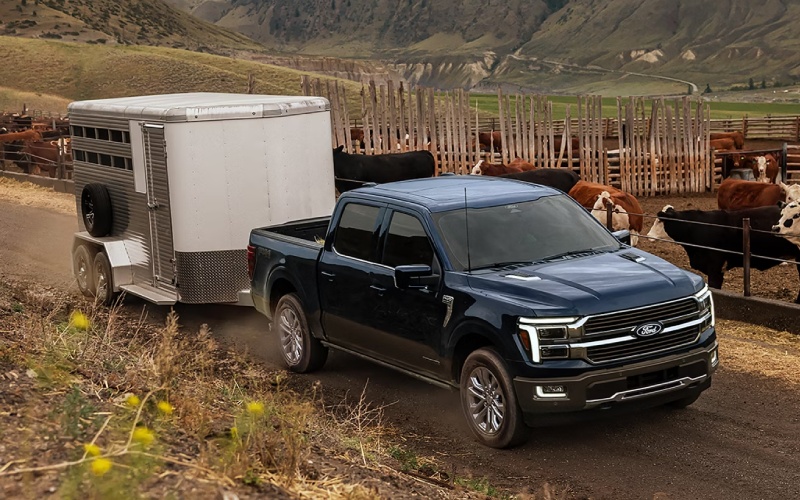
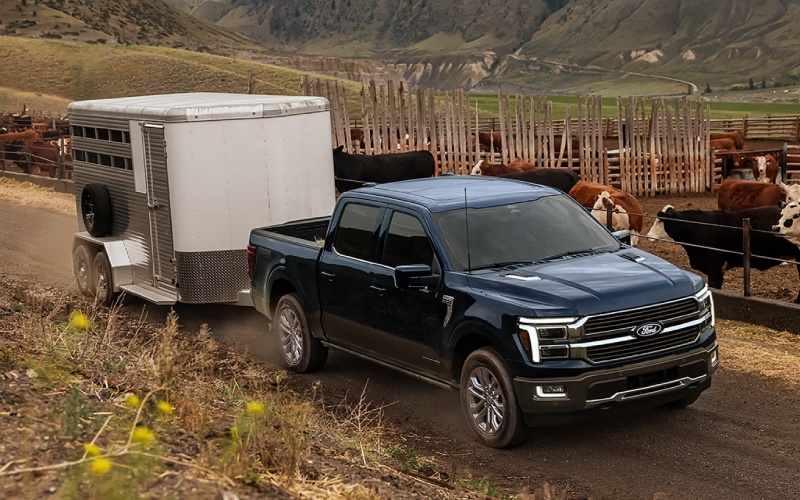
Al Packer Ford West Palm Beach – Which truck keeps trailers more stable on rough roads near Loxahatchee, FL — the 2026 Ford F-150 or the 2026 Toyota Tundra?
When shoppers ask us which half-ton pickup keeps trailers more stable over rough, washboarded surfaces near Loxahatchee, FL, we break the answer into three pillars: powertrain control, chassis tuning, and towing tech. Both the Ford F-150 and Toyota Tundra have strong frames and serious torque, but the F-150 layers in technology that can make those choppy county roads and sandy cut-throughs feel far more manageable with a trailer in tow. In this blog, we’ll walk through the specific systems that keep your trailer planted, your steering calm, and your stopping drama-free — and where each truck shines.
Powertrain Control: Smooth Torque Delivery Matters
Consistent torque delivery is the first ingredient for trailer stability. The F-150’s engine lineup, including the 3.5L EcoBoost® V6 and 3.5L PowerBoost® Full Hybrid V6, emphasizes low-end torque and linear throttle response, helping you avoid the surges that can upset a loaded trailer on washboard or uneven pavement. Toyota’s i-FORCE and i-FORCE MAX hybrid systems pack serious punch as well, yet it’s the F-150’s broader array of engine choices — including a 5.0L Ti-VCT V8 — that lets you tailor the power curve to your trailer’s weight and your driving style. More choice means you can better match torque delivery to terrain, whether it’s a two-axle utility trailer, a center-console boat, or a cargo hauler bound for a Saturday project.
Chassis and Suspension: Control Over the Bumps
Running unloaded down a smooth highway is one thing; towing over patched asphalt and trail ruts is another. The F-150 chassis is tuned to maintain composure with heavier tongue weights and to keep steering consistent when the road surface gets busy. Available off-road packages — from Tremor® trail tech to the desert-bred Raptor® setup — aren’t just for play, either; they bring damping control and articulation that help the truck stay settled over rapid-fire imperfections. Tundra’s multi-link rear suspension is a highlight for ride quality, and it provides towing stability, but the F-150’s mix of hardware and tuning breadth across trims gives you more ways to optimize the truck for your kind of trailer and road.
Towing Technology: The Stabilizing Force Multiplier
The right tech can calm the entire operation. Ford’s Pro Trailer Backup Assist helps you reverse with confidence by using cameras and steering inputs so you can guide the trailer intuitively — a huge help when ruts and dips are waiting at the end of the lane. The available 360-Degree Camera provides stitched views that catch obstacles otherwise hidden at mirror level. Trailer sway control and an integrated trailer brake controller help keep the combination in line. Toyota counters with Trailer Backup Guide with Straight Path Assist and available camera views; it’s effective, especially for straight-line reversals and basic alignment. Where the F-150 stands out is how each tool interlocks — from setup screens to camera angles — creating a more seamless towing experience, especially when you’re stressed and space is tight.
Stopping power is another stabilizer. With a properly set integrated trailer brake controller, the F-150 can modulate braking force between truck and trailer, limiting push and helping maintain a straight track. The Tundra system serves the same mission, and it’s good, but Ford’s menu-driven calibration and on-screen prompts can shorten learning curves for new owners. The result is calmer stops and fewer steering corrections — crucial when surfaces bounce between patched concrete and sandy edges.
Real-World Utility: Power, Access, and Visibility
Trailer stability doesn’t end with the hitch. The F-150’s Pro Access Tailgate lets you swing the gate open even with a trailer coupled, so you can reach cargo without disconnecting — a small change that prevents unnecessary moves on uneven ground. Pro Power Onboard™ can energize work lights or tools while you stage tie-downs, making late-day setups safer and quicker. While the Tundra offers a resilient composite bed and useful tie-down points, Ford’s integrated bed power and tailgate access translate to fewer trips climbing in and out and less time balancing loads with the trailer jack on loose surfaces.
- Powertrain control: Choose the torque curve that suits your load; linear response keeps the trailer settled over chopped surfaces.
- Chassis tuning: Suspension choices and damping help the truck stay composed so you make fewer steering corrections.
- Towing tech: Camera-guided alignment, backup assist features, and an integrated brake controller reduce stress and sway.
Visibility and situational awareness are part of the stability equation. The F-150’s available 360-Degree Camera and Head-Up Display keep the most important information high in your sightline, so you’re scanning the terrain, not the dash. Toyota’s camera system is helpful too, and the large center touchscreen relays clear images. In practice, being able to see down the sides and align quickly with on-screen guidance pays off when a rut or off-camber apron sits just past the drop-in.
Frequently Asked Questions:
Do both trucks offer trailer backup assistance?
Yes. The F-150 features Pro Trailer Backup Assist, while the Tundra offers Trailer Backup Guide with Straight Path Assist. Both aim to simplify reversing, with Ford’s system focusing on intuitive steering inputs and integrated camera views.
Which truck offers more engine choices for tailoring towing feel?
The F-150 provides a wider range of engines, including EcoBoost® V6 options, the PowerBoost® Full Hybrid V6, and a 5.0L Ti-VCT V8, helping you fine-tune torque delivery to your trailer and terrain.
What helps most with stability on rough roads?
A combination of smooth torque delivery, suspension control, and smart towing tech. Matching your engine to your trailer weight and using camera-guided backup systems can significantly reduce sway and steering corrections.
Can I power tools or lights at the site while hitched?
With the F-150’s available Pro Power Onboard™, yes. It can supply on-site electrical power so you can run lights or tools as you secure cargo, even with the trailer connected.
If you’re weighing both trucks and your routes include dirt shoulders, patched asphalt, and the occasional rutted driveway, prioritize a configuration that gives you torque you can meter out smoothly, a suspension tuned for control, and towing tech that feels like a second set of hands. That’s where Ford pulls ahead. Al Packer Ford West Palm Beach — serving Palm Beach Gardens, Loxahatchee, and Wellington — can help you spec an F-150 with the right engine, hitching aids, and camera package for the trailers you tow most often.
Request more 2026 Ford F-150 information
Connect with us


- August 2026
- July 2026
- June 2026
- May 2026
- April 2026
- March 2026
- February 2026
- January 2026
- December 2025
- November 2025
- October 2025
- September 2025
- August 2025
- July 2025
- June 2025
- May 2025
- October 2024
- March 2024
- January 2024
- December 2023
- August 2023
- June 2023
- May 2023
- April 2023
- March 2023
- February 2023
- December 2022
- November 2022